A community event can go from a few folding tables on a field to the highlight of the season with the right entertainment. This community event equipment guide helps Ontario organizers choose rentals that keep kids moving, adults relaxed, and the whole day running on schedule. Whether you are planning a school fun fair in Brantford, a neighbourhood barbecue in Paris, or a family day near Hamilton, the best equipment plan starts with your crowd, your space, and your event goals.
Start With the Event Experience You Want
Before choosing a bouncy castle or booking a popcorn machine, picture what guests should be doing during the event. A toddler-focused gathering needs gentler play options and clear sightlines for parents. A school celebration with older students may need obstacle courses, competitive games, and enough activities to spread out a large crowd.
Think about the rhythm of the day, too. If guests arrive all at once, one inflatable will likely develop a long line within minutes. If your event has staggered activities, speeches, food service, or performances, a larger feature can work because guests naturally rotate throughout the space.
A great community event does not need every possible rental. It needs a balanced mix. High-energy attractions give kids a reason to jump in, while lawn games, food concessions, and shaded seating give families a place to slow down between turns.
Community Event Equipment Guide: Choose Your Anchors
Most successful events have one or two anchor attractions that people notice as soon as they arrive. For family and school events, commercial-grade inflatables are often the main draw. A colourful bouncy castle suits younger children and smaller guest lists, while an obstacle course adds friendly competition and keeps older kids engaged longer.
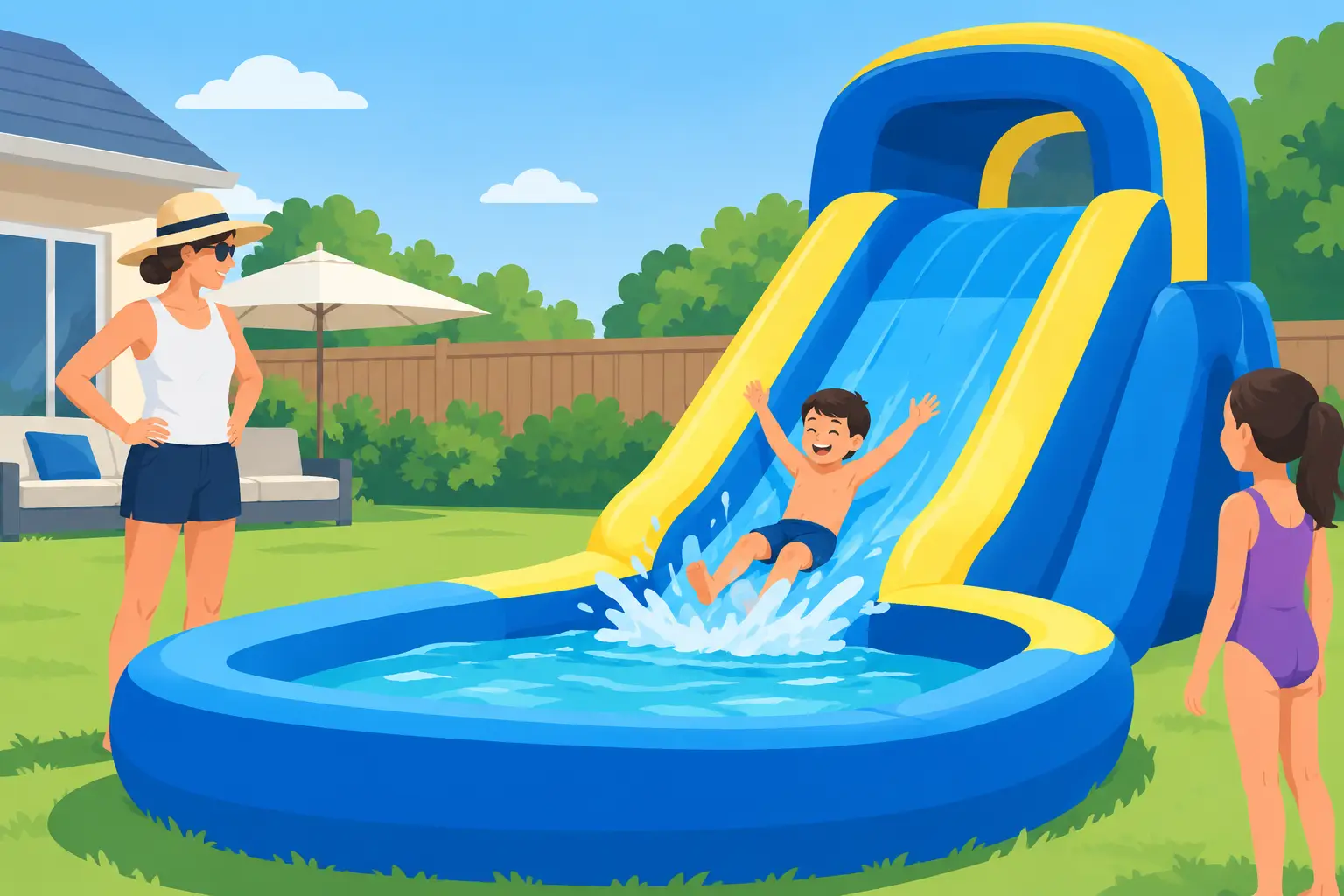
Waterslides can be a huge hit during Ontario’s warm summer weekends, but they require more planning than a dry inflatable. You need a suitable water source, a hose that reaches the setup area, drainage that will not turn the field into mud, and a weather backup plan. Confirm who provides the water connection and whether your venue permits water use before booking.
If you expect a wide age range, pair the main inflatable with activities that do not require waiting in one line. Yard games such as giant Jenga, cornhole, ladder toss, or oversized Connect Four give siblings, grandparents, and parents something to enjoy together. They are also helpful near food tables, where guests tend to gather and chat.
Concession machines bring that fairground feeling without making planning complicated. Popcorn, cotton candy, snow cones, and similar treats work especially well at school fundraisers, graduation parties, and community movie nights. Just make sure you have a serving plan. One volunteer preparing snacks while another handles tickets or guest flow can prevent a popular treat station from becoming a bottleneck.
Match Equipment to Your Guest Count
The number on an invitation is not always the number of people using equipment at the same time. At a two-hour school event, children will cycle through activities quickly. At a six-hour festival, they may return to the same attraction several times. That difference affects how much entertainment you need.
For a small neighbourhood gathering, one inflatable plus a few lawn games may be plenty. For a larger public-facing event, consider separate activity zones: an inflatable zone, a game zone, a food area, and a quieter space with tables or crafts. This keeps traffic moving and makes supervision much easier.
Age matters as much as attendance. Younger children benefit from smaller bounce areas and age-appropriate play. Mixing toddlers and big kids in the same inflatable is rarely a good idea, even if everyone means well. If your crowd spans preschoolers to teens, create clear age or height rotations, or choose more than one attraction.
Measure the Space Before You Book
A rental can look perfect online and still be wrong for your venue if the footprint is not confirmed first. Measure the usable setup area, not the entire property. Account for fences, trees, hydro lines, parking, picnic tables, sports equipment, and the room needed for guests to enter and exit safely.
Inflatables require level ground and open overhead clearance. Grass is often ideal, but a paved setup may be possible depending on the equipment and approved anchoring method. Tell the rental company exactly what surface you have. Photos of the setup area can also help avoid surprises on event day.
Do not forget delivery access. A park can have plenty of open space but a narrow gate, locked bollards, or a long distance from the parking lot to the event area. Ask the venue where vendors can unload and whether you need permission for vehicle access. Those details are easy to miss until setup morning, when they become very important.
Plan for Power, Water, and Weather
Many inflatable rentals need a dedicated electrical outlet close to the setup site. If your event is in a park or on a large field, you may need a generator. Check power availability early, and avoid sharing the same circuit with food warmers, speakers, or other high-draw equipment.
For water attractions, ensure the hose path will not cross a busy walkway. If it must cross a path, use a safe cable or hose cover where appropriate and keep the area monitored. Wet grass and excited kids are a predictable combination, so plan where towels, shoes, and waiting parents will gather.
Weather is one trade-off no organizer can eliminate. A sunny forecast is not a guarantee, and high winds or thunderstorms can make inflatable operation unsafe. Have a clear decision-maker, a way to communicate updates to guests, and an indoor or low-key alternative if your venue allows it. Games, karaoke, or a bubble machine can help maintain the fun when outdoor plans change.
Make Safety Part of the Fun
Safety should feel organized, not restrictive. Assign a responsible adult or volunteer to each active inflatable area, especially during busy arrival periods. Their job is to manage the line, keep age groups separated, make sure shoes and sharp objects stay out, and pause play if conditions change.
Set simple expectations before the event begins. Post the rules near each attraction, announce them when needed, and give volunteers the authority to step in. Children have more fun when the play area is fair, predictable, and not overcrowded.
You should also confirm your venue’s requirements for insurance, permits, electrical access, and equipment placement. Parks, schools, and municipal spaces can have different rules. Booking early gives you time to collect any paperwork and reserve your preferred setup area.
Build a Budget That Has No Surprise Fees
The lowest advertised rental price is not always the lowest event cost. Delivery, setup, water charges, taxes, cleaning, generators, and extra rental time can change the total quickly. Ask for the complete price before you commit, including what happens if your event runs late or weather affects setup.
Transparent pricing makes community planning much easier. Party Vista is built around straightforward local service, with no HST, no hidden water fees, and no clean-up fees, so organizers can spend less time chasing line items and more time planning a party people will remember.
Value is also about how much use you get from each rental. A multi-day rental can make sense for a weekend reunion or a school event that needs setup the day before. Complimentary lawn games can stretch the entertainment budget, especially when you want activity options for guests who are waiting for food or taking a break from the inflatable.
Create a Simple Event-Day Layout
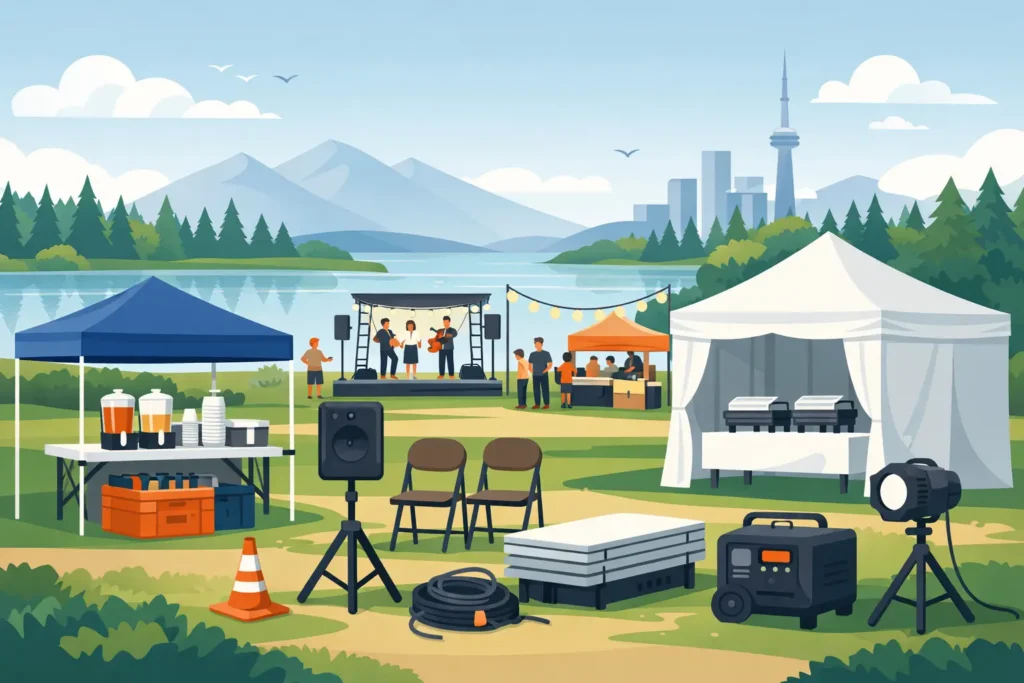
Keep high-energy equipment away from food service, seating, and vehicle traffic. Put the inflatable where it is visible from the main gathering area but with enough room for a line and a clear entrance. Place concession machines where volunteers have access to power and supplies, while lawn games work well in open areas around picnic tables.
A basic event map is worth making, even for a small gathering. Mark equipment locations, power sources, water access, first-aid supplies, garbage bins, exits, and volunteer stations. Share it with your setup team before guests arrive. Everyone will know where things belong, and you will be free to welcome families instead of answering last-minute questions.
The best equipment plan leaves room for real moments: a child conquering an obstacle course, cousins laughing over a lawn game, parents enjoying a coffee while the kids burn off energy. Choose rentals that fit your space and your people, then let the celebration do what it does best – bring the community together!